Understanding The Challenges of CCTV Monitoring
February 21, 2018

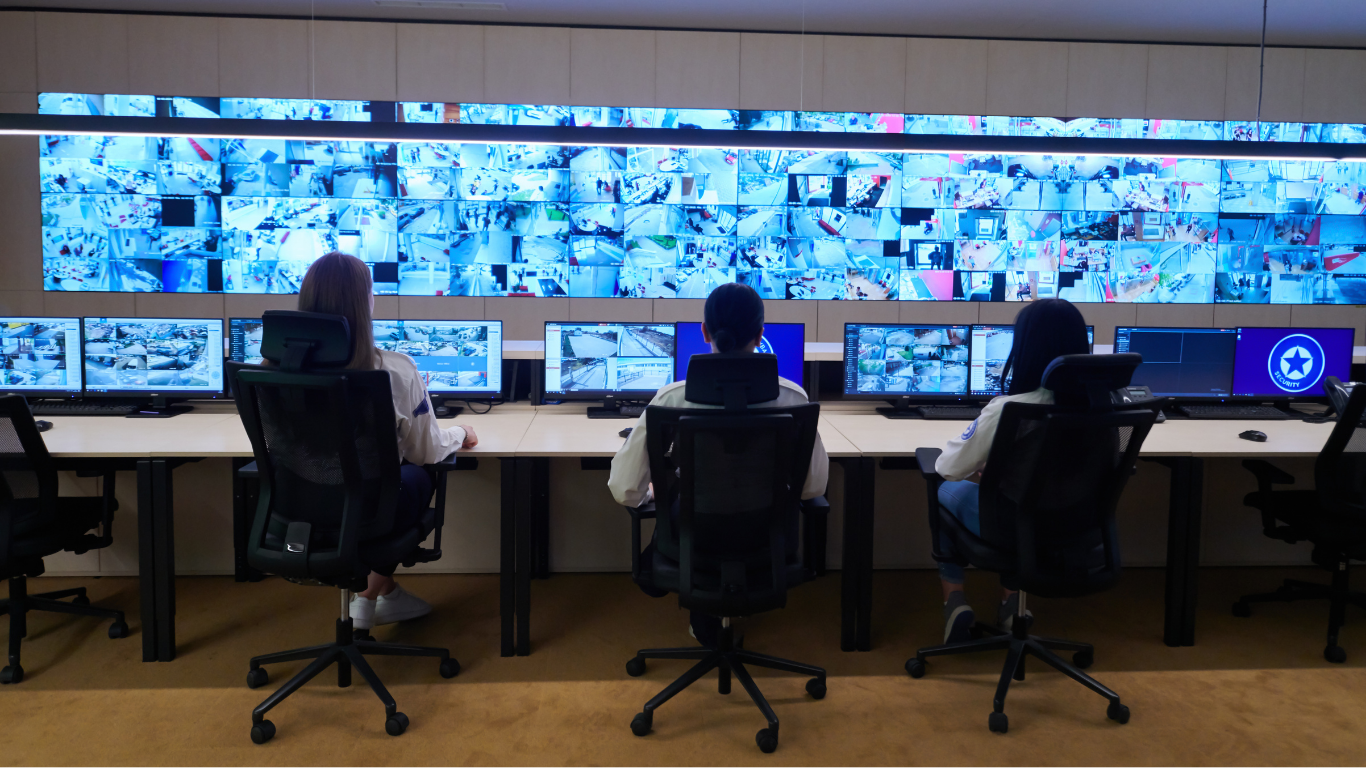
The role of CCTV surveillance can often be a crucial function, from  spotting suspicious and  unattended luggage, to identifying  hostile reconnaissance.

When dealing with potentially critical situations, such as identifying suspicious activity and hostiles searching for  vulnerabilities in a security system, the importance of an effective CCTV service is clear.

It is clear that motivated, attentive and observant security staff can form a highly-effective deterrent, but when   the amount and type of information that an operator can take in is limited, how can you best prevent  errors from occurring ?

Recognising Human Limitations ​

The first step is in recognising and understanding that operators cannot, and do not, see everything.

We are limited in how much information we can process at any point in time, and research shows that tasks which require similar types of processing (e.g. listening to speech and reading, or two tasks that both need visual processing) are particularly problematic.

So what factors need to be considered?

External factors reduce the likelihood of an operator spotting suspicious behaviour :

  • ​ Number of screens monitored
  • Method of monitoring (split screens vs single screen views)
  • Level of alertness
  • Room environment (too hot, too cold, too bright, too dim)
  • Field of view of cameras
  • Refresh rate / bandwidth issues on cameras

Internal factors minimising the detection of suspicious behaviour, or potential problems :

  • ​ Limitations in observation due to divided attention, fatigue and distraction
  • Limitations in recalling an event
  • Personal beliefs and biases
  • Previous experience and knowledge

Maximise the opportunity of suspicious behaviour being detected :

  • ​ Encourage teamwork between operators and security officers on the ground, with  the team on the ground acting as an extension of the eyes and ears of the  control room
  • Encourage reporting anything suspicious from other stakeholders in the  environment, such as cleaners. This is especially important  on sites that cover a large area as the more 'eyes on the ground' the better
  • Log details as soon as they are received, from radio messages or phone calls,  not after an incident has played out. Humans have limitations in memory and their  recall is easily influenced and tainted, making logging during evolving incidents an  essential training task

Remaining Vigilant

Some control room tasks may need to be divided up on the basis of length of time for which an operator can continue to effectively carry out a particular task.

This is especially critical for monitoring tasks that require intense and sustained attention, because as time goes on, this attention may wane, and therefore detection of a person, object or other change in the environment may become less likely or slower.

Human attention span is limited, and tasks that require intensive sustained vigilance such as monitoring CCTV feeds for critical security breaches should be covered in brief shifts of around 20 minutes.

The best practice approach is to rotate tasks within a site, ensuring that the team maintain an understanding of 'norms' for the entire site, without viewing the same area for many hours a day which leads to gaps in cognitive awareness due to boredom.

Situational Awareness

It is important to be aware and have an understanding of the relevant aspects of a dynamic environment in order to best facilitate an appropriate course of action.

What does this mean for a control room? Knowing what's going on, where your resources are, and what to do about it.

Preparation must also be made for the transition from under-load to overload, which occurs when individuals or teams suddenly need to deal with a critical situation.

This can cause confusion as they are unable to cope with the sudden increase in demand for human cognition and leads to stress and reactive, sometimes unreasoned, decision making.

This is more often observed with less experienced security personnel.

Shift handover/briefing/debriefing are essential in maintaining situational awareness between operators in the control room. It is important to ensure an understanding is achieved between the departing and incoming operator of any incidents that may have occurred during the shift, any incidents that are ongoing, and generally anything that is 'out of the norm' for the environment.

Training & Understanding Processes

Regular training, refresher sessions and exercises are very beneficial in maintaining an effective CCTV service.

For example, camera patrols help operators practise the skills required when tracking a person of interest on camera, and improves familiarity with the site and spatial awareness.

Exercises are strongly recommended within the control room:

  • ​ Factor in exercises from the outset to create an atmosphere of continued vigilance.
  • Use different time frames and different conditions.
  • Ensure that lessons learned are captured after exercises.
  • Ensure accepted standard operating procedures are assessed as a result of any learning.
  • Use feedback as a positive training tool.
  • Build a culture of reporting and responding by encouraging communication and removing barriers.

References

Share this article

Recent Posts

By Sarah Jenkins • September 28, 2026
As data centres grow, maintaining visibility across the site becomes more difficult. Contractor activity increases, customer requirements evolve and security information often becomes spread across multiple systems, teams and suppliers. The impact of security and resilience failures can be significant . Data centre outages are estimated to cost UK organisations around £700 million in lost productivity . And in July 2022, the failure of two data centres supporting an NHS trust resulted in £1.4 million in unplanned technology costs after clinical systems across three hospitals were disrupted. Access control, CCTV, monitoring, intelligence and on-site security may all be performing well individually. When information sits across separate systems and suppliers, however, it becomes harder for your team to build a complete picture of risk and respond quickly when something changes. At SecuriGroup , we combine intelligence , technology and people to support organisations operating critical infrastructure, telecommunications networks and high-security environments where visibility, resilience and rapid response are essential. Common Data Centre Security Risks Data centre environments have unique security needs. Customer expectations, uptime commitments, audit requirements, contractor activity and critical infrastructure protection all place demands on security teams. Security measures need to protect the facility while supporting operational continuity and efficient day-to-day operations. Unauthorised Access Controlling who can enter the facility, and where they can go once inside, remains one of the most important aspects of data centre security. Whether it's an unauthorised visitor, a compromised credential or a failure in site procedures, access incidents can expose critical infrastructure, customer environments and sensitive information to unnecessary risk. Insider Threats Employees, contractors, and suppliers often require access to restricted areas as part of their role. Without clear oversight, permissions management and audit trails, organisations can struggle to identify inappropriate access, policy breaches or activity that increases operational risk. Operational Disruption Not every security incident involves malicious intent. Access control failures, contractor non-compliance, delivery issues and procedural breakdowns can all affect site operations. In environments where uptime is critical, even relatively minor disruptions can have wider consequences. Activism and Emerging Threats As digital infrastructure becomes increasingly important, data centres are attracting more attention from activists, organised groups and other threat actors. Understanding the wider threat landscape helps organisations assess risk, adapt security measures, and strengthen resilience against evolving threats. Contractor and Visitor Management A typical data centre can see a constant flow of engineers, contractors, maintenance teams, and customer representatives. Managing access approvals, visit or records and authorised movements across the facility becomes more difficult as activity levels increase, particularly in environments operating around the clock. Environmental Risks Physical security isn't the only concern. Fire, flooding, power disruptions, and cooling failures can all impact uptime and place critical infrastructure at risk. Security teams often play an important role in escalation procedures, incident response, and maintaining site continuity when issues occur. Customer Requirements and Access Governance Many data centres support multiple customers, each with different access requirements, reporting expectations, and security standards. Maintaining visibility over who can access customer environments, server rooms, technical spaces and critical infrastructure areas helps support both customer assurance and compliance requirements. Why Data Centre Security Becomes More Challenging as Facilities Grow As facilities grow, managing data centre security becomes more complex. Security teams are often expected to do more with the same resources, while balancing operational demands, customer requirements, and uptime objectives. Common data centre security challenges include: Investigating incidents across multiple systems Managing increasing contractor activity Maintaining visibility across multiple facilities Meeting customer audit and reporting requirements Managing multiple customer access requirements Coordinating multiple security providers Reducing reliance on manual processes Protecting uptime while supporting business continuity objectives Maintaining security standards across 24/7 operations Balancing security controls with operational efficiency Customer audits, compliance reviews, and security assessments frequently require clear records of access activity, contractor movements, and incident management. When information is stored across multiple systems, preparing for these requests can become time-consuming and resource intensive. These challenges are often what prompt organisations to review their data centre security strategy. Existing measures may still be performing adequately, but they no longer provide the visibility, coordination and operational oversight needed to support a growing facility. The Hidden Cost of Fragmented Security Security environments rarely stand still. New technologies are introduced, compliance requirements evolve, and additional providers are often brought in to address specific challenges. While each change may strengthen security in its own right, it can also create greater operational complexity. Individual security measures may be performing well, while information remains spread across multiple systems, suppliers and teams. This makes it harder to understand how those measures are performing together. Access control activity, CCTV footage, visitor records, monitoring alerts, incident reports and threat intelligence are often held in separate platforms, making it harder to build a complete picture of what's happening. When information is fragmented, investigations can take longer, reporting becomes more time-consuming and emerging risks become more difficult to identify. Bringing data, processes and teams together helps create faster decision-making and stronger oversight across the operation. The Three Layers of an Effective Data Centre Security Strategy Intelligence: Understanding Risk Before It Impacts Operations By the time an incident reaches your site, you've already lost valuable time. Intelligence helps security teams understand emerging risks, assess vulnerabilities, and make decisions based on current information rather than assumptions. This can include: Threat monitoring Vulnerability assessments Security risk reviews Situational awareness reporting Intelligence-led planning For data centre operators, intelligence provides context around threats that could affect sites, people and operations. Through specialist threat monitoring, intelligence reporting and risk assessments, SecuriGroup helps organisations understand their exposure and determine where additional action may be needed. Technology: Turning Data into Actionable Insight Data centres generate huge volumes of security information. Access control activity, CCTV footage, contractor records and incident reports all contribute valuable insight, but reviewing them separately can slow investigations and decision-making. Integrated technology helps teams move from collecting data to using it effectively. By connecting monitoring, reporting and security systems, organisations can assess incidents faster, identify trends earlier and maintain better oversight of site activity. Integrated security technologies , monitoring solutions and real-time reporting give teams the information they need to respond quickly and effectively. People: The Critical Layer Technology Can’t Replace Technology can highlight unusual activity. People determine what happens next. In critical environments, security personnel can take on a much wider role than traditional guarding responsibilities. They may manage access governance, support incident response, carry out operational checks, monitor compliance processes and act as the link between site operations, technology platforms and external stakeholders. At SecuriGroup, security officers are supported by specialist training, operational procedures and access to wider intelligence and technology platforms, helping them make informed decisions when issues arise. Experience, judgement and situational awareness remain essential in high-security environments. Well-trained officers can recognise concerns that may not trigger automated alerts and take action before they develop into larger issues. Why an Integrated Approach to Data Centre Security Delivers Better Results If intelligence sits with one provider, technology sits with another and security personnel are managed separately, gaining a complete view of risk becomes more difficult. An integrated approach helps you: Improve situational awareness Strengthen incident response Reduce blind spots Streamline reporting Improve governance Support compliance requirements Enhance operational resilience Together, these benefits support stronger decision-making, faster responses, and more consistent security performance across the facility. When Should You Review Your Data Centre Security Strategy? Security reviews are often triggered by growth, change, or increasing risk. You may be expanding to additional locations, onboarding customers with stricter security requirements or managing increasing volumes of contractors and third-party engineers across your facility. In some cases, nothing dramatic has happened. Existing measures may be doing their job, but visibility, reporting or coordination across the site may not be as effective as you'd like. Common signs that it's time to review your approach include: CCTV, access control and monitoring systems operating independently Multiple providers responsible for different parts of security Limited visibility across the site Growing contractor and visitor volumes Inconsistent reporting Slow incident escalation Difficulty identifying emerging risks Concerns around operational resilience Data Centre Security in Practice: Real-World Examples Every data centre operates differently, but the core requirements are often the same: maintaining control of access, protecting uptime, managing risk, and responding quickly when issues arise. Many of these challenges are shared across other critical infrastructure environments, from telecommunications networks to nationally significant industrial facilities, where operational resilience is equally important. The examples below demonstrate how integrated security strategies can help address those challenges in real-world environments. H3G (Three UK): Protecting Critical Telecommunications Infrastructure The challenge H3G operates data centres and network infrastructure supporting millions of mobile users across the UK. Maintaining security, operational resilience and uninterrupted service across multiple sensitive sites requires strict access management, continuous monitoring and rapid incident response. How we helped Security across five sites Access control and alarm monitoring Routine patrols and operational checks Server temperature monitoring Enhanced health and safety procedures Specialist resilience and security training The result Consistent security standards across five critical sites, supporting operational resilience, compliance and uninterrupted service delivery. Serverfarm: Securing High-Risk Data Centre Environments The challenge As a global data centre management provider, Serverfarm required a security solution capable of protecting highly sensitive facilities while maintaining strict access governance and supporting a busy flow of contractors, visitors and operational personnel. How SecuriGroup helped Access control and visitor verification procedures Reception and front-of-house security services Site patrols and control room management Pre-scheduled visitor management processes Behavioural Detection Awareness training Hostile Reconnaissance training Protestor Management training Security training aligned to data centre environments and NPSA guidance The result Greater control over site access, stronger visitor governance and enhanced preparedness for emerging security threats. Why Organisations Choose SecuriGroup for Data Centre Security Data centre operators need to protect uptime, support compliance requirements and maintain high security standards in increasingly complex environments. SecuriGroup brings together intelligence, technology and operational security within a single strategy , helping organisations improve oversight, coordinate responses and manage risk more effectively. Our integrated model provides: Greater visibility across your site Better coordination between security functions Improved threat awareness Faster incident response Reduced reliance on multiple suppliers Stronger operational resilience A security strategy that can evolve alongside your facility Whether you're reviewing existing arrangements, developing a new facility or improving visibility across multiple locations, we help create security solutions that align with the way your operation actually runs. Security Investment Should Deliver Visibility, Not Complexity If you're reviewing your data centre security strategy, focus on whether your current approach provides the oversight, responsiveness and resilience needed to support your operation as it grows. Effective data centre security combines intelligence, technology and experienced personnel to reduce risk, support uptime, and improve operational resilience.  Looking to strengthen security across your data centre environment? Speak to SecuriGroup about creating a tailored security strategy that aligns with the way your facility operates.
By Laura Imrie • September 28, 2026
We’re proud to continue our support of Stamp Out Spiking, the UK charity campaigning to tackle spiking and raise awareness of its impact.
By Laura Imrie • September 28, 2026
Discover how SecuriGroup's partnership with Code First Girls is creating new pathways into tech careers and helping build a more diverse technology team.
By Laura Imrie • September 15, 2026
Learn what Martyn's Law means for venues, events and organisations across the UK. Understand the requirements, responsibilities and practical steps to prepare for the Terrorism (Protection of Premises) Act 2025.

By Laura Imrie • September 4, 2026
Katelyn Gordon has been named a finalist in the 2026 Women in Security Awards, recognising her leadership, frontline excellence and impact at Silverburn.

By Laura Imrie • September 4, 2026
SecuriGroup's Monica O'Brien has been named a 2026 Social Mobility Awards finalist for her impact on social recruitment and inclusion.
Intelligence-led security
By Laura Imrie • September 4, 2026
Learn how intelligence-led security supports event security planning, risk assessment and decision-making for events of all sizes.
Alex Bell, Head of Technology
By Laura Imrie • September 3, 2026
We're delighted to announce the promotion of Alex Bell to Head of Technology. Over 16 years with SecuriGroup, Alex's journey is a great example of the opportunities for progression within the business. Starting on the frontline and progressing through operational and technology roles, he has played a key part in the growth of both the organisation and its technology function. Commenting on the promotion, George Dunlop, Director of Technology, said: "Alex's promotion to Head of Technology is thoroughly deserved and reflects the leadership, dedication and expertise he has demonstrated throughout his career with the organisation." Congratulations, Alex, on this well-deserved achievement. To mark the occasion, we caught up with Alex to reflect on his career journey so far and what comes next. Q&A With Alex Bell Looking back on your 16 years with SecuriGroup, what have been some of the highlights? A huge highlight has always been my time working on the frontline with the Events team. I've had the opportunity to deliver security at landmark events including the Liverpool International Music Festival, Southbank Centre New Year's Eve celebrations and the UCI Cycling World Championships. Being able to travel across the country representing the organisation, while progressing from non-licensed stewarding through to senior management, is something I’ll always be proud of. Another standout has been seeing our technology department evolve. I've had the privilege of being part of its growth from a single part-time support role into a 13-strong multidisciplinary team. Today, we're not only supporting the business, but designing and delivering the systems, infrastructure, and tools that help our team do their jobs every day. Above all, the biggest highlight has been the people. From the breakroom to the boardroom, I've worked alongside people from all backgrounds and walks of life. Hearing their stories, sharing experiences, and supporting each other over the years has been incredibly rewarding. What are you most looking forward to in your new role as Head of Technology? I'm looking forward to making sure our technology genuinely supports the people doing the work. Having started on the frontline myself, my approach is based on common sense. That means listening to what people need, removing unnecessary complexity, and delivering reliable technology that helps them get on with the job. Technology should make life easier for people, and that's what I'll continue to focus on in this role. What advice would you give to people looking to progress their careers at SecuriGroup? There are two things that stand out to me. First, care about the standard of your work. Focus on the things you can control and look for ways to make them better. Small improvements, professional attitudes and attention to detail all add up over time.  Second, say yes to new experiences. Put yourself forward for different opportunities, visit new locations, and get to know people across the business. SecuriGroup is built on relationships, and people remember the people who step up, support others, and get involved when it matters. Alex's career journey is a fantastic example of what's possible through hard work, commitment and a willingness to embrace new opportunities. We look forward to seeing him lead the next chapter of our technology function and wish him every success in his new role.
August 7, 2026
A partnership between SecuriGroup and Down’s Syndrome Scotland is helping people with Down’s syndrome secure paid roles at one of Scotland's highest-profile sporting events, Glasgow 2026, challenging long-standing barriers to employment and creating new opportunities within the events and security sector. The initiative sees candidates gaining hands-on experience through paid event roles in a major event environment while building skills, confidence and independence. The programme comes at a time when employment inequalities remain significant across the UK. Government figures show that the employment rate for disabled people is 53.1%, compared with 81.6% for non-disabled people. For people with learning disabilities, the gap is even greater. Fewer than 5% of people with a learning disability are in paid employment, despite 86% of those without a paid job saying they would like one. Against that backdrop, the partnership between SecuriGroup and Down’s Syndrome Scotland is creating paid employment opportunities for individuals and the chance to gain experience within Scotland's events and security sector, while demonstrating the value of a more inclusive workforce. The individuals recruited through this partnership are not only contributing to the visitor experience but also developing transferable workplace skills that can support future careers. As employers across the security and events industries continue to focus on attracting and developing talent, the initiative highlights the importance of widening access to employment and creating pathways for people who are often overlooked despite having the ambition and ability to succeed. “Major sporting events bring people together and create unforgettable experiences for athletes, spectators and communities alike. We're incredibly proud to be creating paid employment opportunities for individuals as part of that journey. Every person involved in delivering an event of this scale plays an important role in its success. Seeing our team members build confidence, develop new skills and contribute to such a high-profile occasion demonstrates the positive impact these opportunities can have, both for the individual and for the wider industry.” , said John Gallacher, Operations Director at SecuriGroup. Monica O’Brien, Recruitment Manager at SecuriGroup, adds: "At SecuriGroup, we believe talent exists everywhere, but opportunity doesn't always. Our partnership with Down’s Syndrome Scotland is about creating meaningful pathways into employment and demonstrating what can be achieved when barriers are removed and potential is recognised. The security and events industries need diverse talent and different perspectives. By providing paid employment opportunities at a major event, we're helping individuals develop skills and confidence while showing employers the value that a truly inclusive workforce can bring. We hope this initiative encourages more organisations to look beyond traditional recruitment approaches and create opportunities for people who are ready and eager to work." Jo Davidson, Programme Lead at Down’s Syndrome Scotland said: "When someone with Down’s syndrome is given an equal chance to work, it changes everything. Having a meaningful job transforms lives - improving health, boosting mental wellbeing, and creating a sense of independence and purpose. Above all, it creates visibility in the workplace, challenging outdated stereotypes and shifting company culture. That’s why this partnership with SecuriGroup is so vital. An event like this isn't just work; it’s an opportunity to build confidence, gain real skills, and show employers what’s possible.” The partnership reflects a shared commitment to improving accessibility, widening participation and helping more people with Down syndrome gain access to meaningful work opportunities. While people with learning disabilities remain among the least likely groups to be in employment, this partnership demonstrates what is possible when organisations are willing to invest in potential, challenge perceptions and create opportunities that empower people to succeed.  As Scotland welcomes thousands of visitors, athletes and officials, the initiative offers a powerful example of inclusion in action, proving that opportunity, support and belief can unlock talent in every community.
August 6, 2026
International Security Officers’ Day is an opportunity to recognise the dedication, professionalism, and expertise of security personnel around the world. At SecuriGroup, we're proud of the officers who work tirelessly to protect people, businesses and communities every day. Their vigilance, commitment, and expertise have a positive impact in every environment they serve. Whether they're welcoming visitors, supporting clients, responding to incidents or helping create safe and secure environments, our security officers play a vital role. Their service often happens behind the scenes, but its impact is felt far and wide. More Than a Security Presence The role of a security officer is about far more than safeguarding buildings and assets. Our officers are often the first point of contact for visitors, tenants, and customers. They provide reassurance during challenging situations, act quickly when incidents occur, and help ensure everyone can go about their day safely and confidently. Every shift brings new challenges, and our teams consistently demonstrate the calm professionalism, vigilance, and customer service for which we are known. "Our officers are at the heart of everything we do. Their commitment to delivering outstanding service and keeping people safe is what makes SecuriGroup such a trusted partner for our clients." - David Wilson, Chief Operating Officer Celebrating Our People With more than 4,000 security officers protecting people, property and communities across over 1,700 sites nationwide, International Security Officers’ Day is an opportunity to celebrate the individuals whose hard work and contribution make a lasting impact. This year, we took the opportunity to celebrate our teams in person. Colleagues travelled the length and breadth of the UK, visiting sites and meeting security officers face-to-face to thank them for their contribution, dedication and service. These visits gave us a chance to connect directly with the people who represent SecuriGroup across the country, hear about their experiences, and recognise the invaluable contribution they make to our clients, communities and the wider business, while personally thank them for all they do. A Message of Thanks On International Security Officers’ Day, we would like to thank every member of the SecuriGroup team for their hard work, dedication, and professionalism.  Your commitment to keeping people safe, supporting our clients, and representing our values is greatly appreciated. We are proud to work alongside you and celebrate the contribution you make to our business, clients and communities each and every day. Thank you for everything you do.
Show More